 LinkedIn
  You-tube



Every growing business reaches a point where the numbers start to get complicated. Revenue is growing, expenses are rising, and decisions feel riskier than before. You have reports, but they don’t always give you clarity.
That’s usually when businesses start thinking about hiring a fractional CFO.
But here’s the thing, choosing the right one isn’t just about experience. It’s about finding someone who actually understands your business and helps you move forward.
This guide will help you do exactly that.
What is a Fractional CFO?
A fractional CFO is a part-time financial expert who helps you manage, plan, and improve your business finances without the cost of a full-time hire.
Instead of just tracking numbers, they focus on:
- Financial strategy
- Cash flow planning
- Business growth decisions
For many businesses, this is the most practical way to access high-level financial expertise.
Why Choosing the Right Fractional CFO Matters
Not all CFOs bring the same value.
The right one will:
- Bring clarity to your financial data.
- Help you make confident decisions.
- Support your growth plans.
The wrong one?
- Will create confusion
- Slow down decision-making
- Add cost without real value.
That’s why this decision matters more than most businesses think.
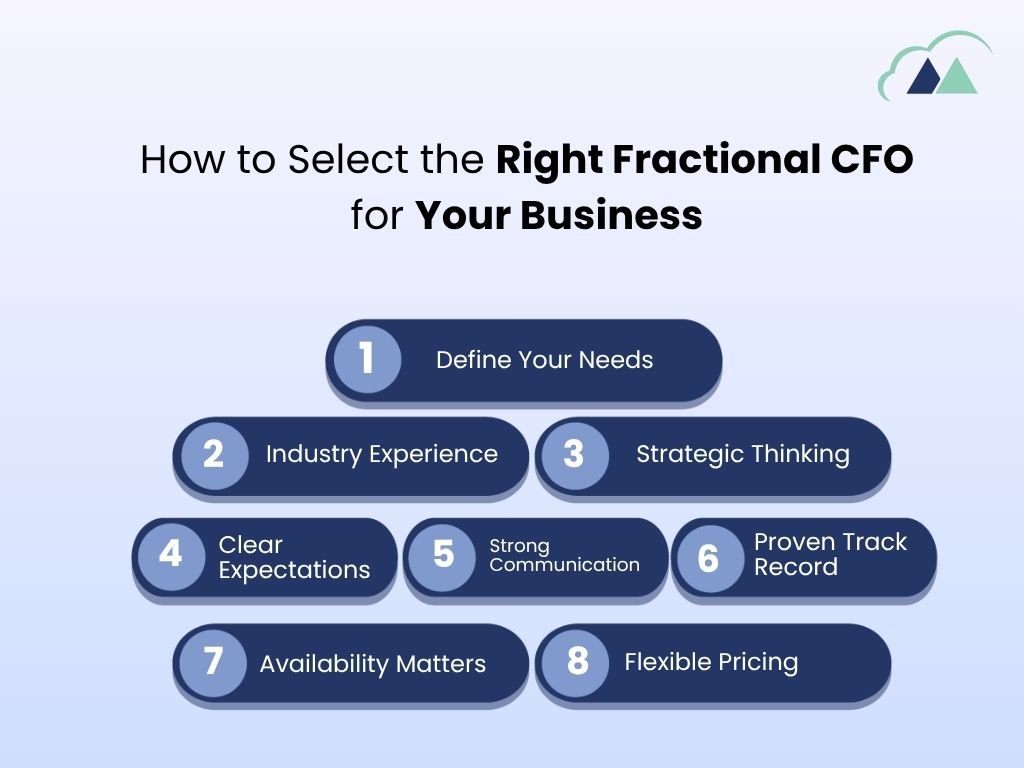
1.Start With Your Business Needs
Before you look for a CFO, understand your own situation.
Ask yourself:
- Do you need better cash flow visibility?
- Are you planning to raise funds?
- Is your financial reporting inconsistent?
- Are you preparing for growth or expansion?
Every business has different priorities. The clearer your need, the easier it is to find the right fit.
2. Look for Relevant Industry Experience
Experience is important—but relevance is everything.
A CFO who understands your industry will:
- Know your financial challenges.
- Understand your revenue model.
- Provide practical, not generic advice.
For example:
- SaaS businesses need different metrics than manufacturing.
- Service companies focus differently from product-based businesses.
Choose someone who has worked in a similar environment.
3. Evaluate Strategic Thinking (Not Just Skills)
A strong fractional CFO doesn’t just manage numbers—they think ahead.
During your conversation, notice how they approach problems.
Do they:
- Ask questions before giving answers?
- Try to understand your business model.
- Think long-term, not just short-term fixes?
If yes, you’re on the right track.
4. Define Scope and Expectations Clearly
“Fractional” can mean different things.
It could be:
- A few hours a week
- A few days a month
So clarity is important.
Define upfront:
- What will they be responsible for?
- Will they handle strategy or execution?
- Will they work with your internal team?
Clear expectations prevent confusion later.
5. Check Communication and Collaboration Style
Finance is not just about numbers – it’s about decisions and decisions require clear communication.
Your fractional CFO should be able to:
- Explain complex data in simple terms.
- Work closely with your team.
- Support leadership discussions
If they can’t simplify finance, they won’t add much value.
6. Review Their Track Record
Don’t just rely on titles or years of experience.
Ask for real examples:
- What problems have they solved?
- What results did they deliver?
- Have they handled similar business situations?
Look for:
- Practical experience
- Measurable impact
- Consistent outcomes
Past performance often reflects future value.
7. Understand Their Core Role
A fractional CFO is not just a reporting resource.
They bring value across multiple areas:
Strategic:
- Financial planning and forecasting
- Business decision support
- Profitability analysis
Operational:
- Cash flow management
- Budgeting
- Reporting improvements
Growth:
- Fundraising support
- Investor communication
- Scenario planning
Their role is to guide your business, not just report on it.
8. Assess Availability and Responsiveness
Since fractional CFOs work with multiple clients, availability matters.
Ask:
- How quickly do they respond?
- How do they handle urgent situations?
- How many clients are they managing?
9. Understand Pricing and Engagement Model
Pricing can vary based on:
- Scope of work
- Time commitment
- Experience level
Common models:
- Monthly retainer
- Hourly rate
- Project-based pricing
Make sure you clarify:
- What’s included in the cost
- Flexibility in scope
- Any additional charges
Common Mistakes to Avoid
Avoid these common hiring mistakes:
- Hiring based only on personality
- Ignoring industry experience
- Not defining responsibilities clearly.
- Expecting execution instead of strategy
A CFO is a strategic partner—not just an extra resource.
Signs You’ve Chosen the Right Fractional CFO
You’ll notice the difference quickly if you’ve made the right choice:
- Financial reports become clearer.
- Decision-making becomes faster
- Cash flow feels more controlled.
- Your team becomes more confident.
The right CFO doesn’t just manage finances; they improve how your business operates.
Choosing the right fractional CFO is not just a hiring decision. It’s a business decision that directly impacts your growth.
When you find the right fit:
- You gain financial clarity.
- You reduce uncertainty
- You make smarter decisions.
And that’s what every growing business needs.
Complete Guide to Fractional CFOs for Small Businesses, 2026
Looking to bring clarity, control, and smarter financial planning into your business? Get custom finance solutions to optimize your business performance.
Frequently Asked Questions (FAQ)
What’s the difference between a fractional CFO and a controller?
A controller focuses on accuracy, compliance, and historical reporting. A fractional CFO focuses on strategy, forecasting, decision support, and financial leadership.
How many hours does a fractional CFO typically work?
It varies, but most engagements range from 10–40 hours per month depending on complexity and business stage.
Is a fractional CFO only for startups?
No. Fractional CFOs are common in growing, mid-sized, and even mature companies that need senior expertise without a full-time hire.
How quickly should I expect results?
Many businesses see meaningful improvements within the first 60–90 days, especially in reporting clarity and cash flow visibility.
Can a fractional CFO help with fundraising?
Absolutely. Many fractional CFOs specialize in investor prep, financial modeling, and pitch support.