
 LinkedIn
  You-tube

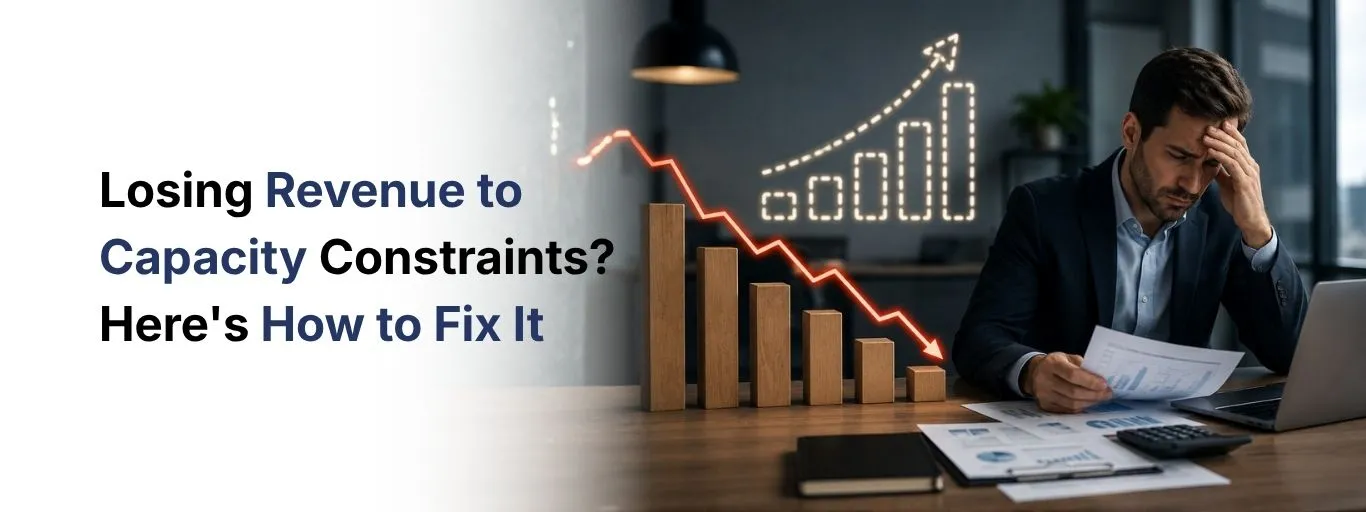

CPA firms are losing revenue because they cannot take on more work
How many qualified clients has your firm turned away this year simply because your team did not have enough capacity to handle the work?
For many CPA and accounting firms in 2026, the answer is uncomfortable. The demand is there, but the ability to deliver is limited. Firms are receiving more referrals, more advisory opportunities, and more client requests but staffing shortages and overloaded teams are preventing them from capturing that growth.
CPA firm capacity constraints are becoming one of the biggest barriers to revenue growth. The problem is not a lack of opportunities. The problem is having enough skilled people, efficient processes, and flexible resources to serve those opportunities profitably.
When teams are stretched too thin, the impact appears everywhere:
- New clients are delayed or turned away.
- Partners spend hours completing preparation work instead of advising clients.
- Review cycles become slower.
- Staff burnout increases.
- Existing clients may experience reduced responsiveness.
The traditional solution has always been simple: hire more people. But today’s accounting talent shortage has made that approach slower, more expensive, and less predictable.
The firms that are succeeding are taking a different approach building scalable accounting delivery models that combine technology, process improvement, and outsourced accounting support.
The Hidden Cost of Capacity Constraints in CPA Firms
Capacity problems rarely appear as one major financial loss. Instead, they create dozens of smaller revenue leaks that add up throughout the year.
1. Lost revenue from turning away clients
A referral during tax season represents a potential long-term relationship. However, when your team is already overloaded, the answer often becomes:
“We cannot take on another client right now.”
That client usually does not wait. They find another CPA firm that has available capacity.
Every declined engagement represents not only lost current revenue but also lost future opportunities for advisory services, tax planning, bookkeeping, and recurring accounting work.
2. Partners spending time on work below their value
One of the most expensive capacity problems is partner time being consumed by tasks that do not require partner-level expertise.
When partners are handling:
- Document preparation
- Basic reconciliations
- Data review
- Routine bookkeeping questions
- Tax assembly work
they have less time for:
- Strategic tax planning
- Client advisory conversations
- Business development
- Relationship management
- Every hour spent on administrative work is an hour removed from activities that grow the firm.
- Slower delivery and increased review pressure
When teams operate beyond capacity, quality risks increase.
Common outcomes include:
- Longer turnaround times
- Rushed reviews
- More rework
- Increased client frustration
- Higher operational stress
For CPA firms, maintaining quality while managing growing workloads requires more than simply asking existing employees to work harder.
3. Employee burnout and turnover
Overloaded accounting teams often experience higher burnout rates, especially during repeated busy seasons.
When experienced employees leave, firms lose more than a person. They lose:
- Client knowledge
- Process expertise
- Mentorship ability
- Review capacity
This creates a cycle where fewer employees carry more responsibility, making retention even harder.
Why Hiring Alone Is No Longer Solving the CPA Staffing Shortage
For years, hiring additional accountants was the primary answer to capacity challenges. Today, several industry changes have made that approach more difficult.
1. The accounting talent pipeline is shrinking
The accounting profession continues to face a shortage of qualified professionals entering the field. Fewer accounting graduates are choosing public accounting careers, while experienced professionals are retiring or moving into industry roles.
The result is simple: demand for accounting talent is growing faster than supply.
2. Experienced professionals are becoming harder to retain
Senior accountants, managers, and directors are increasingly being recruited by:
- Corporate finance teams
- Advisory organizations
- Technology companies
- Wealth management firms
When senior professionals leave, firms lose not only production capacity but also the people responsible for training and developing future leaders.
3. Accounting work is becoming more complex
Modern CPA firms are managing more complexity than ever before.
Examples include:
- Multi-state compliance requirements
- Increasing reporting requirements
- Digital accounting systems
- Expanding advisory expectations
- Complex tax regulations
The amount of judgment and expertise required has increased, while available capacity has decreased.
4. Rising compensation costs impact profitability
Accounting firms are competing for the same limited talent pool. Higher salaries, benefits, and recruiting costs make traditional hiring expensive especially for smaller and mid-sized firms.
This creates a difficult situation: Firms need more people to grow, but adding permanent employees may reduce margins.
A scalable solution requires a different approach.
A Practical Framework to Increase CPA Firm Capacity
The most successful accounting firms are not waiting for the talent market to fix itself. They are redesigning how work gets completed.
1. Identify where your team’s time is actually going
The first step is understanding which activities consume the most hours.
Many firms discover that valuable employees spend significant time on repetitive processes such as:
- Bookkeeping
- Bank reconciliations
- Data entry
- Document organization
- Tax preparation support
- Client onboarding tasks
These activities are necessary, but they do not always require the highest-cost internal resources. Identifying these tasks creates immediate opportunities to increase capacity.
2. Segment Clients Based on Complexity and Value
Not every client requires the same level of expertise or the same amount of internal resources.
CPA firms can improve capacity by categorizing clients based on:
- High-complexity, high-value clients that require partner or manager involvement
- Standardized clients that can be supported through repeatable workflows
- Seasonal or overflow clients that require additional resources during peak periods
Client segmentation helps firms determine where senior professionals should spend their time and where processes can be standardized, automated, or supported by external accounting teams.
The goal is not to reduce service quality. The goal is to ensure the right people are handling the right work.
3. Use Technology to Improve Accounting Firm Efficiency
Technology plays an important role in solving capacity challenges, but it is not a complete replacement for skilled professionals.
Modern CPA firms are using:
- Cloud accounting platforms
- Practice management software
- AI-assisted document processing
- Automated workflows
- Digital collaboration tools
These solutions help reduce repetitive work and improve visibility across engagements.
However, technology works best when combined with the right people and processes. Automation can make your team more productive, but it cannot replace professional judgment, client relationships, or advisory expertise.
4. Build Capacity Through Outsourced Accounting Services
One of the fastest ways CPA firms are addressing staffing shortages is through outsourced accounting support.
Instead of increasing permanent payroll for every workload increase, firms are building flexible delivery models that combine their internal team with dedicated outsourced accounting professionals.
Accounting outsourcing services can support areas such as:
- Bookkeeping
- Bank and account reconciliations
- Accounts payable and receivable processing
- Payroll support
- Tax preparation and return assembly
- Client onboarding
- Accounting cleanup projects
- Back-office workflow support
This approach allows firms to increase capacity without waiting months to recruit, hire, and train new employees. It also helps solve one of the biggest challenges in public accounting: seasonal demand.
During tax season, firms can increase support. After peak periods, they can adjust resources based on actual workload. This creates a more flexible and predictable cost structure.
5. Protect Your Senior Talent’s Time
The highest-value employees in your firm should spend their time on activities that require experience and professional judgment.
When repetitive accounting tasks are delegated, partners and managers can focus on:
- Client advisory services
- Strategic planning
- Complex reviews
- Business development
- Relationship management
This improves profitability while also improving employee satisfaction.
Senior professionals are more likely to stay when their work involves meaningful client interaction and strategic problem-solving instead of constant administrative pressure.
Turning Capacity Constraints Into a Competitive Advantage
The firms that solve capacity challenges are not simply reducing workload pressure they are creating opportunities for growth.
- Accept more profitable engagements
Instead of declining qualified leads because of limited bandwidth, firms can confidently take on additional clients.
- Improve turnaround times
Additional support helps firms complete work faster without sacrificing accuracy.
- Increase partner productivity
Partners can spend more time on advisory services and revenue-generating activities.
- Create predictable growth
Flexible staffing models allow firms to manage busy seasons without carrying unnecessary fixed costs throughout the year. The accounting firms winning in today’s market are not necessarily the ones with the largest internal teams.
They are the firms that have built flexible systems allowing them to scale efficiently.
How Madhda Inc Helps CPA Firms Reclaim Lost Capacity
At Madhda Inc, we help CPA and accounting firms solve capacity challenges through reliable BPO and outsourced accounting support.
Our services are designed to integrate with your existing workflow and provide additional capacity for time-intensive accounting operations, including:
- Bookkeeping support
- Reconciliations
- Payroll assistance
- Accounts payable and receivable processing
- Tax preparation support
- Seasonal overflow assistance
- Back-office accounting operations
Whether your firm needs year-round support or additional resources during tax season, Madhda provides a flexible delivery model designed around your workload.
Ready to Stop Losing Revenue Because of Capacity Constraints? Let’s talk about how Madhda’s BPO services can give your firm the capacity to grow.